
Branding for Impact
Why Vulnerability, Storytelling & Personal Brand Matter More Than Ever

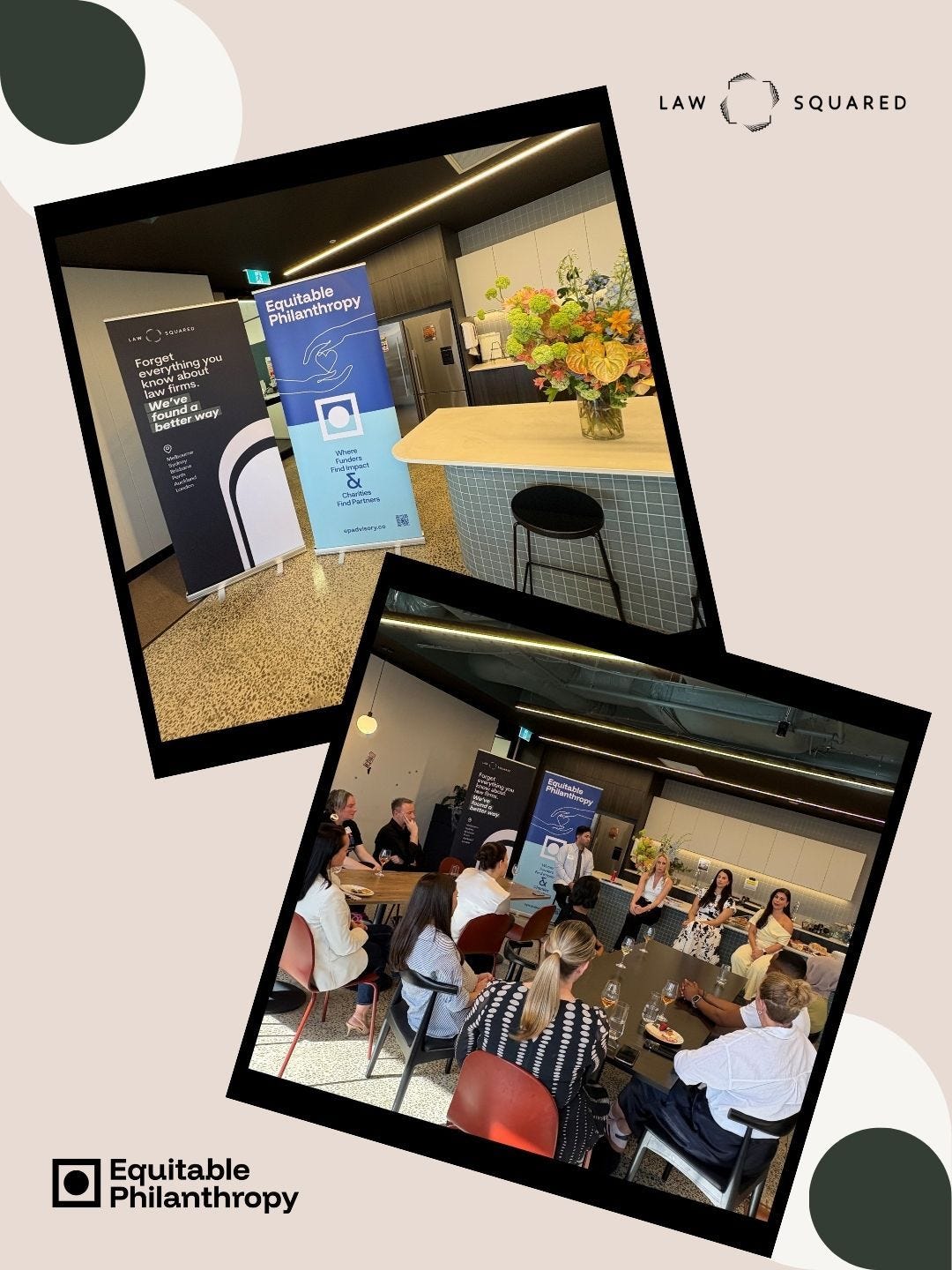
A recap of our sold-out panel discussion event hosted by Law Squared & Equitable Philanthropy
This month we held a sold-out evening panel discussion at Law Squared’s Melbourne office, originally planned for the boardroom but quickly moved into their beautiful kitchen space after registrations passed 30 attendees — and a waitlist began to form. It was clear that the topic resonated: Branding for Impact — Personal & Organisational Branding for NFP Leaders.
The event brought together a cross-section of nonprofit leaders, corporate partners, lawyers, creatives, and social impact professionals, all eager to explore how personal brand intersects with leadership, fundraising, and community building.
I was joined on the panel by two remarkable women whose lived experience, professional backgrounds, and generosity shaped the conversation:
Rachel Maksimovic — Writer, Marketing Specialist & Founder of a Community for Mums
Rachel has spent more than ten years working in communications, marketing and storytelling for not-for-profits and member-based organisations. She recently published her first book and has organically built an engaged online community for single mums by sharing her own journey with raw honesty and humour.
Vanessa Liano née Shambrook — Lawyer, Advocate, Nutritionist & Founder of Sculpt Republic
Vanessa is a former Senior Lawyer and the Founder of Sculpt Republic, a women’s online movement & nutrition coaching company that educates and empowers women through evidence-based coaching inside the SR App, that has grown rapidly thanks to her commitment to authenticity, strong values, and a deep service mindset. She brings experience from the legal sector, B-Corp-aligned business practices, and a decade of advocacy and supporting not-for-profits and sponsor relationships through organisations such as Victorian Women Lawyers and the Port Phillip EcoEcoCentre.
Together, the three of us explored how modern leadership demands more than expertise — it requires visibility, humanity, and the courage to be known.
Below is your event wrap-up.
1. Setting the Scene — Why This Topic, Why Now
We opened the discussion with the context behind the event:
In a sector built on trust, generosity and relationships, many leaders feel torn between being the face of their organisation and feeling like self-promotion goes against the culture of the nonprofit world.
But as we discussed, donors aren’t simply investing in mission statements or strategic plans — they are investing in people.
This event was designed to help leaders rethink visibility not as vanity, but as stewardship.
2. Vulnerability as a Catalyst for Connection
Both Rachel and Vanessa shared how their platforms grew not through perfectly curated messaging, but through sharing their real stories.
Rachel’s single-mum community grew because she was willing to speak openly about her experience — the hard moments, the funny moments, the lonely moments.
Vanessa shared how talking about values, health, identity, and her personal journey in business helped her community connect deeply with her fitness brand.
Their reflections echoed a bigger truth:
Vulnerability creates trust, and trust builds community.
In a world saturated with polished corporate messaging, authenticity is no longer optional — it’s what people gravitate toward.
3. Why NFP Leaders Need a Personal Brand
When it was my turn to speak, I shared what I see daily in the philanthropic sector:
Funders fund people.
Donors support people.
Visionaries attract investment.
A strong personal brand is not about ego — it’s about giving funders confidence in the person responsible for stewarding their investment.
When leaders articulate:
who they are,
what they believe, and
why their organisation exists,
they create clarity, credibility, and emotional connection — the three things every funder needs before they say yes.
Many CEOs worry that personal brand is “self-promotion,” but we reframed it as:
“Make the work visible by making the leader visible.”
This is especially important for fundraising:
A clear, consistent personal voice helps donors understand what your charity does and why it matters.
4. Difference > Competition
The panel agreed that it’s not about being “better” — it’s about being different.
Rachel talked about leaning into her unique voice instead of trying to sound like other authors or creators.
Vanessa shared how her values-first storytelling sets her apart in both law and fitness — two industries where authenticity can feel rare.
And we explored why nonprofit leaders should also embrace this:
Your story is part of your strategy.
It’s the easiest, most human way to differentiate your mission in a crowded landscape.
5. The Experience Must Match the Story
We discussed the importance of alignment between what leaders promise through their brand and what people actually experience.
A compelling brand might attract attention, but only integrity sustains it.
Vanessa spoke about how service excellence is a non-negotiable in her business.
Rachel shared how being consistent — online and offline — built loyal engagement.
And I reflected on how in the NFP sector, alignment between message and action is critical to long-term donor trust.
6. Using Platforms Without Burning Out
We talked practicalities too:
LinkedIn for thought leadership
Instagram for community and connection
Substack for long-form storytelling
Speaking events for credibility and reach
The consensus:
You don’t need to be everywhere.
You just need to be somewhere consistently.
Choose the platforms that feel aligned with your voice and your capacity — and let the rest go.
7. Final Advice for Leaders Wanting to Show Up More
Each speaker offered one piece of guidance for anyone ready to be more visible:
Rachel: Start small. Share one honest story.
Vanessa: Know your values and let them guide what you share.
Catherine: Visibility is an act of service — not self-promotion.
Because if your mission matters, your voice matters too.