
From Capacity to Inclination
My new favourite topic when talking about the current state of funding

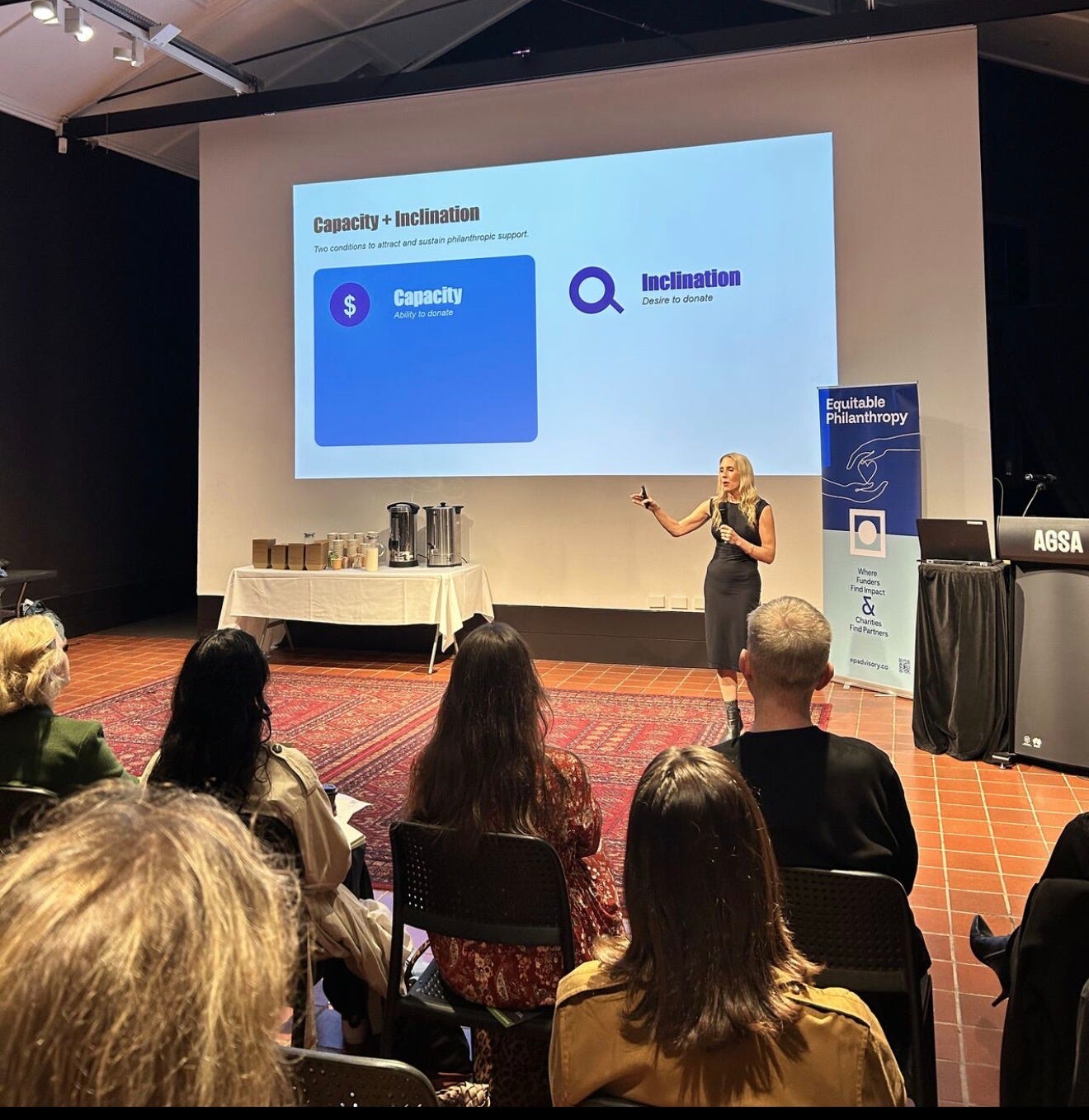
There Is Capacity. So Why Isn’t It Flowing to Some Organisations?
I was in the Apple Store on Rundle Mall in Adelaide on the weekend.
It was busy. Not just a little bit busy—packed.
I walked in to buy a new business phone and could barely find a staff member to help me. Every team member was already with someone else. People were testing products, asking questions, lining up to purchase.
There was energy. Intent. Movement.
People weren’t just browsing. They were buying.
And it struck me—particularly in the context of the ongoing conversation about cost of living pressures.
Because yes, the cost of living is rising.
Yes, households are feeling it.
But there is also, undeniably, still a lot of capacity.
Technology is, of course, essential in many ways. But the latest phone, the upgraded watch, the new pair of AirPods—these are still discretionary purchases. They are choices. And people are choosing them, every day, in large numbers.
Which raises an uncomfortable question for our sector:
If people have the capacity to spend, why isn’t more of that capacity flowing into giving? Because some organisations are exceeding budget, and others are referencing about the rise in cost of living when not meeting budget.
My View: It’s Not Just About Capacity
We often default to the idea that there isn’t enough money.
But the data tells a different story.
We are seeing significant wealth creation.
The rich are getting richer.
Trusts and foundations continue to grow.
New giving vehicles are being established at pace.
And yet, one statistic stands out:
Only around 50% of individuals earning over $1 million make any tax-deductible donation.
Which means the other half—people with extraordinary capacity—are not giving a cent.
Not a small amount.
Not a token contribution.
Nothing.
So again, the question isn’t: Is there capacity?
It’s: Why isn’t it translating into giving?
And rather than talk about the rise in cost of living, shouldn’t we focus our attention on how we build relationships with the top 1% earners that have capacity?
The Real Barrier: Inclination
For many people, the barrier is not can I afford to give?
It’s why would I?
When you listen to funders—or potential funders—you start to hear it clearly:
I’m not inclined to give because…
– I don’t trust where the money will go.
– I don’t feel connected to the cause.
– I’m not sure this organisation can deliver real impact.
– No one has engaged me in a meaningful way.
None of these are about money.
All of them are about confidence, connection, and belief.
How Inclination Is Formed
Now compare that to what actually moves someone to give:
I am inclined to give because…
– I trust the leadership.
– I’ve seen the impact up close.
– I feel part of something meaningful.
– I understand clearly what my money will do.
– Someone took the time to bring me into the story.
Inclination doesn’t happen by accident.
It is built—carefully, intentionally, and often slowly.
And crucially, it is rarely built through a cold ask.
Where the Shift Happens
Some of the most powerful moments in philanthropy don’t happen through campaigns or applications.
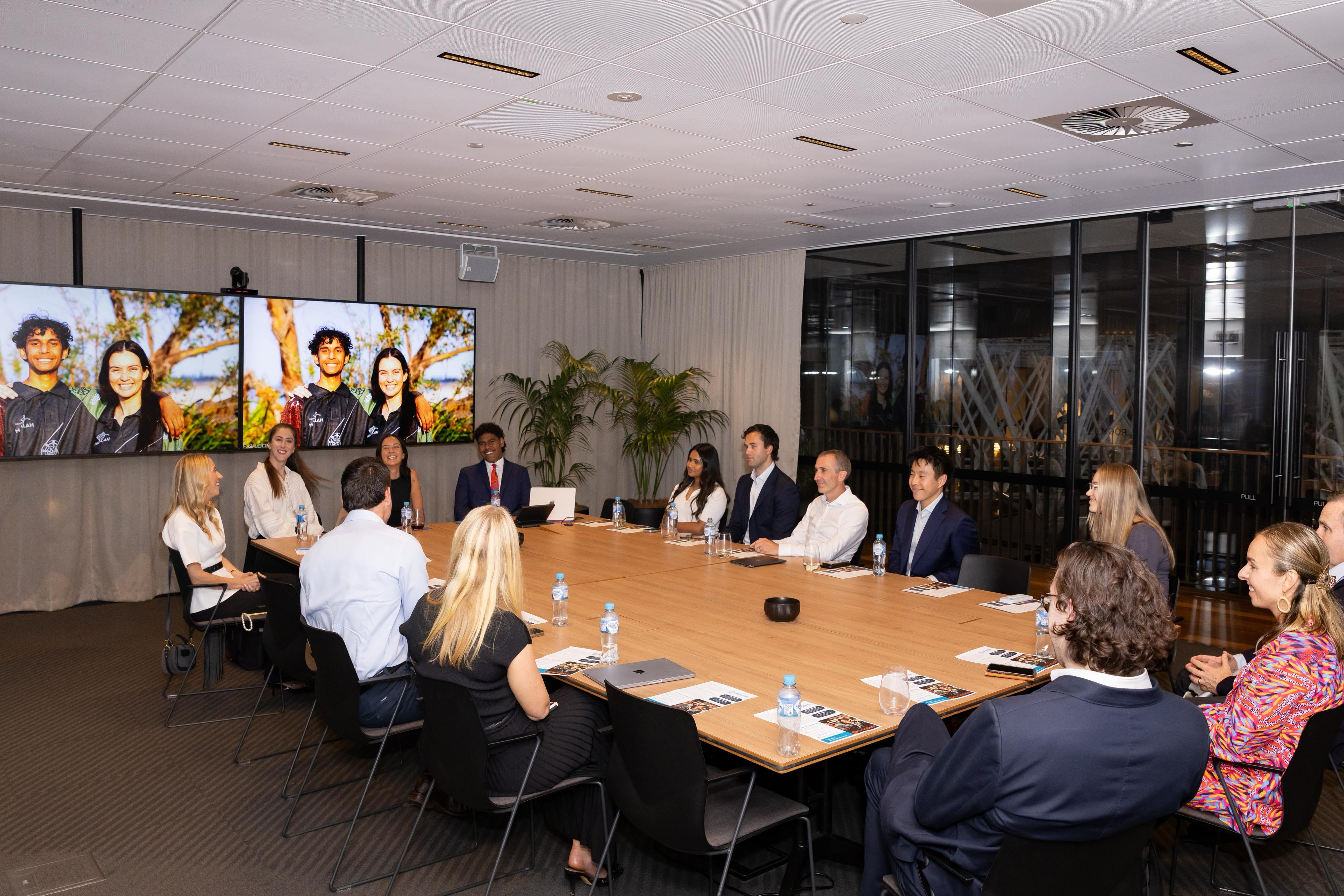
They happen in small rooms.
At roundtables.
Over conversations.
Through introductions that feel thoughtful and considered.
I think about organisations like Madalah. We recently held a small round table event with them, so introduce their incredible CEO to our contacts and meet a graduate of their program. Someone who is now at university, in a job, building a future that once felt out of reach.
In that moment, the abstract becomes real.
It’s no longer “a program supporting education outcomes.”
It’s a person. A story. A trajectory changed.
And when that happens, something shifts internally.
Not from awareness to donation.
But from disinterest to inclination.
Designing for Generosity
If we accept that capacity exists—but inclination is the constraint—then our role changes.
It’s no longer just about asking better.
It’s about creating the conditions where people want to give.
That means:
– Moving from scale to intimacy
– From information to experience
– From transactions to relationships
– From persuasion to connection
It means asking:
How do we bring people closer to the work?
How do we build trust in a way that feels real?
How do we create moments that stay with someone long after they leave the room?
Because the Apple Store doesn’t just sell products.
It creates an environment where people feel confident, excited, and ready to buy.
There is no reason philanthropy can’t learn from that.
A Shift Worth Making
There is capacity.
We see it every day—in spending, in wealth creation, in the structures being built to hold and distribute money.
But capacity alone doesn’t drive giving.
Inclination does.
And if we want to unlock more funding for the sector, we need to spend less time assuming scarcity—and more time understanding what actually moves people to act.
Because the opportunity isn’t just to ask for more.
It’s to create a world where more people want to give.
And that is a very different challenge.